
How to Choose Grade 11 Courses With Your Future in Mind
Grade 11 is an important time for Ontario students to plan ahead. Learn how to choose courses that align with your interests, prepare for Grade 12 prerequisites, and keep college, university, and career options open.
Grade 11 is an important year for Ontario high school students. As students begin thinking more seriously about college, university, apprenticeships, and future careers, the courses they choose can help shape the opportunities available to them after graduation.
If your teen is selecting Grade 11 courses this fall, now is a good time to look beyond next semester's timetable and consider the bigger picture. The right choices can help students prepare for Grade 12 prerequisites, explore their interests, and keep their future options open.
At Aubrey Academy, we understand that every student's path looks different. Whether your teen already has a clear career goal or is still figuring out what they enjoy, thoughtful course planning can make the transition from high school to postsecondary education easier.
Why Grade 11 Course Selection Matters
Grade 11 is more than another year of earning credits toward the Ontario Secondary School Diploma (OSSD). It is also an opportunity to prepare for the courses and requirements students may encounter in Grade 12.
Many college and university programs specify particular Grade 12 courses for admission. Students often need to complete the appropriate Grade 11 prerequisites before they can take those senior-level courses.
For example, a student interested in engineering may need to plan for senior mathematics and physics. Someone considering a health sciences program may need to investigate biology, chemistry, and mathematics requirements. A student interested in business may benefit from exploring mathematics and business-related courses.
The exact requirements depend on the institution and program. Planning ahead gives students more time to identify what they need rather than discovering a missing prerequisite in Grade 12.
Start With Your Interests, Not Just Your Marks
It is tempting to choose courses based only on past grades, friends' choices, or which classes seem easiest. While workload and academic strengths matter, students should also consider what interests them and where they might want to go next.
Encourage your teen to think about three questions:
What subjects do I enjoy? Consider the classes, projects, and activities that keep you interested and motivated.
What am I good at? Think about your strengths, the skills you have developed, and the subjects in which you feel confident.
What would I like to explore? You do not need to have your entire future figured out. You can use Grade 11 to investigate different fields and possibilities.
Students who are undecided about their future can still make thoughtful choices. The goal is to select courses that meet graduation requirements while preserving reasonable options for the next stage of their education.
Understand the Different Course Pathways
Ontario high school courses have different pathways and purposes. Understanding the course codes can help students make informed decisions.
University preparation (U)
University preparation courses are designed to prepare students for university-level study. They are often required for admission to university programs, particularly when a program specifies particular Grade 12 prerequisites.
College preparation (C)
College preparation courses help students develop the knowledge and skills needed for college programs. They may be appropriate for students pursuing a college diploma or other college pathway.
University/college preparation (M)
University/college preparation courses are designed to prepare students for both university and college pathways, depending on the subject and program requirements.
Workplace preparation (E)
Workplace preparation courses focus on knowledge and skills relevant to entering the workplace after high school.
Open courses (O)
Open courses are designed to broaden students' education and may be taken by students with different postsecondary plans.
The appropriate pathway depends on the individual course and the student's goals. A course code alone does not determine whether a student will qualify for a particular college or university program. Always check the admission requirements for the specific program your teen is considering.
Research Grade 12 Prerequisites Before You Choose
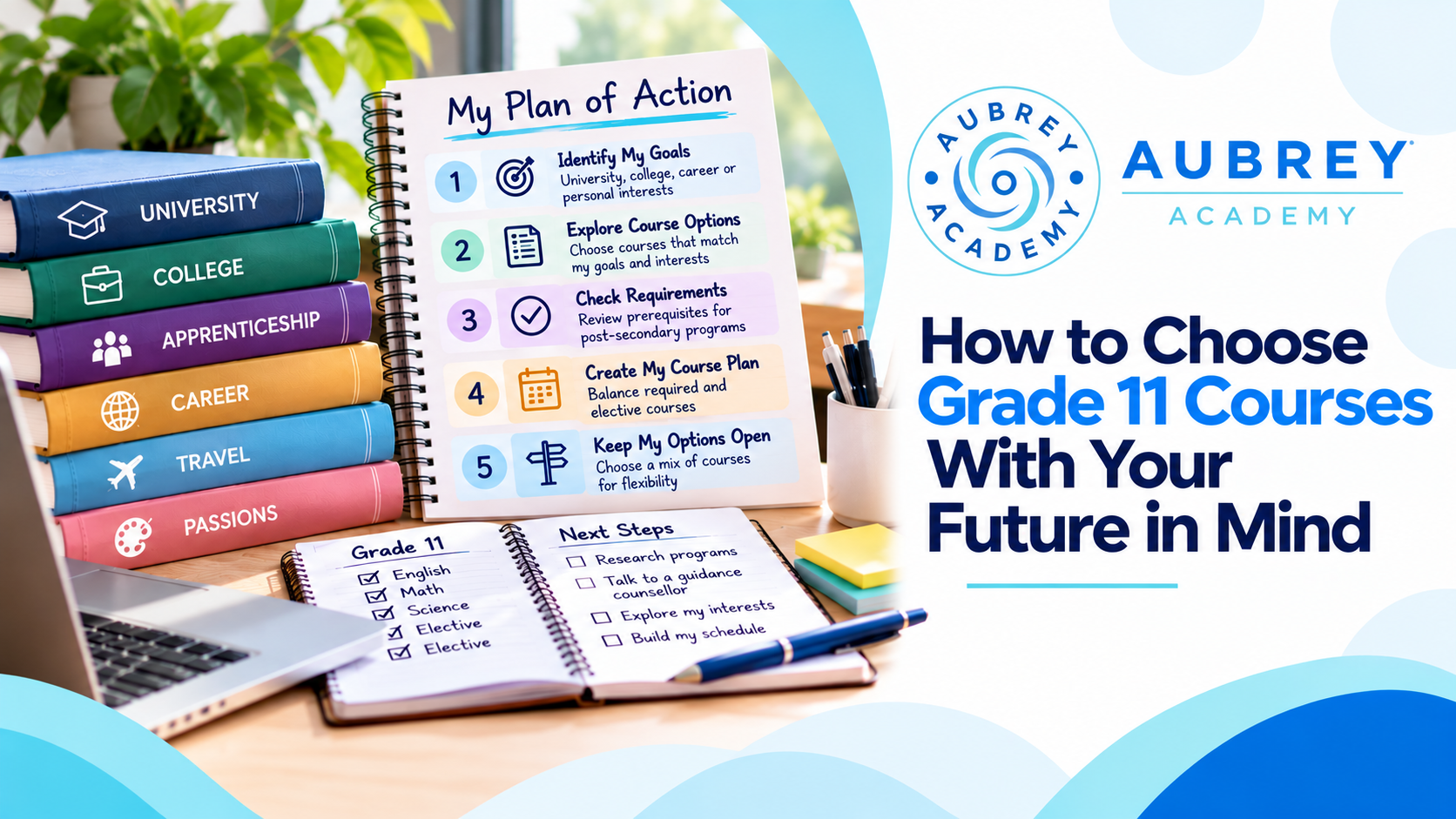
One of the most useful things students can do before finalizing Grade 11 courses is research the requirements for a few possible postsecondary programs.
You do not need to choose a university or college today. Instead, use this exercise to identify courses that may be important for your future options.
Start with these steps:
Choose two or three possible programs. They can be in the same field or represent different interests.
Visit the official college or university websites. Look for admission requirements for each program.
Write down the required Grade 12 courses. Note any specific mathematics, science, English, or other prerequisites.
Work backward to Grade 11. Check which courses are required to enter those Grade 12 courses.
Review your plan with your guidance counsellor. Confirm that your selections meet your current graduation requirements and keep your intended pathways open.
Admission requirements can change, so always use the institution's current information rather than relying solely on advice from friends, older students, or online discussions.
What If You Haven't Decided on a Career Yet?
Not every Grade 11 student knows what they want to do after graduation, and that is completely normal.
If your teen is undecided, focus on balancing their interests, strengths, graduation requirements, and potential future pathways.
Consider these strategies:
Keep an eye on prerequisites for fields that interest you, even if you are not ready to commit.
Explore subjects you enjoy and courses that introduce you to new areas of learning.
Ask questions about college, university, apprenticeship, and workplace pathways.
Avoid dropping a course that may be an important prerequisite without checking the consequences first.
Speak with a guidance counsellor if you are unsure which options will keep the most doors open.
The aim is not to predict your entire future in Grade 11. It is to make informed decisions that give you room to grow and change direction as your interests develop.
Balance Academic Goals With Your Other Commitments
Course selection is not only about meeting admission requirements. Students also need a realistic plan for managing their workload.
A demanding timetable combined with extracurricular activities, competitive sports, a part-time job, family responsibilities, or other commitments can become difficult to manage.
Before selecting courses, consider how much time you can realistically devote to assignments, studying, assessments, and exam preparation. Think about which subjects may require extra support and whether your schedule leaves enough room for rest and other responsibilities.
Students who need additional flexibility may also wish to explore individual online OSSD courses. Depending on their circumstances and school arrangements, an online course can be an option for completing a prerequisite or taking a course that does not fit their regular timetable.
A flexible learning arrangement should still include a clear plan for completing coursework and meeting academic expectations.
What If You Need a Course Your School Doesn't Offer?
Sometimes a student discovers that their school does not offer a particular course, that a course conflicts with another required class, or that they need an additional course to prepare for a future program.
Before changing your plans, speak with your guidance counsellor about the available options. Depending on your situation, you may be able to consider another timetable arrangement or an individual course through an eligible online school.
Aubrey Academy offers online OSSD courses for Ontario students in Grades 9–12, including selected Grade 11 courses in English, mathematics, science, business, and other subject areas.
If you are considering an additional course, first confirm that it meets your specific academic goal and that you satisfy its prerequisites.
You can browse the Aubrey Academy course list to explore available options.
A Simple Grade 11 Course-Planning Checklist
Before submitting your course selections, use this checklist to review your plan.
Confirm that your courses support your progress toward the OSSD.
Research the admission requirements for programs that interest you.
Identify the Grade 12 courses you may need.
Check the prerequisites for those Grade 12 courses.
Consider your academic strengths, interests, and current workload.
Discuss any uncertainties with your guidance counsellor.
Investigate alternatives if a required course is unavailable or does not fit your timetable.
Keep a copy of your course plan and revisit it as your goals develop.
A little planning now can help reduce stress later and give you more confidence when Grade 12 course selection arrives.
Frequently Asked Questions
Is Grade 11 important for university admission in Ontario?
Grade 11 can be important for preparing for university admission because students use this year to complete prerequisites for Grade 12 courses. Universities generally base admission decisions on their published requirements, including specified Grade 12 courses and marks. Requirements vary by program and institution.
Can I change my mind about my career after choosing Grade 11 courses?
Yes. Many students change their interests as they learn more about themselves and their options. The key is to review any new plans against the required prerequisites and graduation requirements before changing courses.
Should I take university preparation courses if I'm unsure about university?
That depends on your interests and possible future pathways. If university is one option you want to preserve, investigate the required courses before choosing your timetable. A guidance counsellor can help you understand which choices make sense for your situation.
What if I am missing a prerequisite for Grade 12?
Speak with your guidance counsellor as early as possible. They can help you understand your options and whether an alternative timetable or an additional course may be appropriate.
Can I take a Grade 11 OSSD course online?
Individual online OSSD courses may be an option for eligible students who need a particular credit or prerequisite. Confirm the course's requirements, availability, and suitability for your academic plan before enrolling.
Start Planning Your Next Step
Grade 11 course selection is an opportunity to make decisions that support both your immediate learning needs and your longer-term goals. Students do not need to have everything figured out, but they should understand how their choices may affect the courses and programs available to them later.
At Aubrey Academy, we support students working toward their OSSD through flexible online learning options.
If your teen needs a particular course, wants to explore available Grade 11 options, or is unsure how an online course might fit into their academic plan, we invite you to connect with our team.
Explore your options: Visit our online OSSD course list to see available courses.
Need help finding the right course? Contact Aubrey Academy at info@aubreyacademy.ca or call/text (416) 998-3354 to discuss your student's needs.
Planning ahead today can help students approach Grade 12 with greater confidence and a clearer path toward what comes next.
Aubrey Academy
Ontario Ministry-Inspected Private High School
Flexible online learning for students working toward their OSSD.

A Different Path to the OSSD
Not every student follows the traditional high school path. Discover how flexible learning options can help Ontario students balance academics with athletics, performing arts, work, travel, and other commitments while working toward their Ontario Secondary School Diploma (OSSD).

There is more than one way to work toward an Ontario Secondary School Diploma (OSSD). While many students follow the traditional high school pathway, others may need a different approach because of their schedule, learning needs, personal circumstances, or future goals.
For some Ontario students, a flexible education pathway can make it possible to continue working toward an OSSD while creating more room for the things that matter in their lives.
What Does a “Different Path” Look Like?
The traditional high school experience follows a fairly predictable structure: students attend classes during the school day, follow a semester schedule, and complete their courses alongside a group of classmates.
But not every student's circumstances fit that model.
A different pathway might involve:
Completing some courses online
Taking individual courses outside of a student's regular school
Learning through a flexible or asynchronous program
Taking courses during the summer
Completing courses while travelling
Balancing high school with intensive athletics or performing arts
Catching up or getting ahead with additional courses
Changing schools during high school
Working toward an OSSD through a private school
The goal isn't necessarily to take a completely different route. Sometimes a student simply needs one part of their education to work differently.
The OSSD Remains the Goal
Choosing a different learning environment does not mean choosing a different standard.
Students working toward an Ontario Secondary School Diploma still need to meet the applicable Ontario graduation requirements. This includes completing the required number of credits and other graduation requirements established by the Ontario Ministry of Education.
That's why understanding a student's existing credits and remaining requirements is so important before making changes to their education plan.
Considering a different path for your student? Explore Aubrey Academy's Online High School and OSSD Programs.
Why Do Students Choose a Different Path?
There isn't one type of student who benefits from a more flexible pathway.
A student might need a different approach because they are:
Balancing Athletics
Competitive athletes may spend significant time training, travelling and competing. A traditional school schedule may not always fit around those commitments.
Pursuing Performing Arts
Dancers, musicians, actors and other performers may have rehearsals, competitions, auditions and performances that take place during traditional school hours.
Travelling Frequently
Some students travel regularly with their families or for athletic, artistic or other commitments. Online learning can allow them to continue their coursework while away from home.
Working Part-Time
Older high school students may have employment responsibilities alongside their education. A flexible schedule can make it easier to balance work and school.
Looking for a Different Learning Environment
Some students simply learn better when they have greater control over their environment, schedule and pace.
Catching Up or Getting Ahead
A student may need to recover a credit, improve a mark, complete a prerequisite, or earn an additional credit without changing their entire high school program.
Does a Different Path Mean Learning Alone?
Not at all.
One of the biggest misconceptions about flexible or online education is that students are simply left to teach themselves.
A quality online learning environment can provide students with access to teachers, instruction, feedback, assessments and academic support.
At Aubrey Academy, students complete Ontario curriculum courses online while receiving support from Ontario Certified Teachers. The school's asynchronous model allows students to work without fixed class times while still having teacher guidance throughout their courses.
The flexibility is in how students learn — not in whether they receive academic support.
Can Students Combine Different Learning Options?
In some situations, students don't need to choose between a traditional school and an alternative pathway.
A student may remain enrolled in their current school while taking an individual OSSD course online, depending on their circumstances and the policies of the schools involved.
For example, a student might take an additional course because they:
Need a prerequisite for a future program
Want to improve a course mark
Need to recover a credit
Want to get ahead
Cannot fit a particular course into their regular timetable
This can provide flexibility without requiring a student to completely change their high school experience.
[Learn more about Aubrey Academy's individual OSSD courses.]
What About University or College Plans?
Taking a different path through high school does not mean giving up postsecondary goals.
In fact, students who have a specific university or college program in mind may benefit from careful academic planning.
Course selections can matter when a student is working toward a particular postsecondary program. Students should look ahead at admission requirements and make sure their high school course plan supports their future goals.
This is particularly important when students are:
Considering competitive university programs
Planning for college
Exploring specialized programs
Missing a prerequisite
Changing their career direction
Trying to improve marks before applying
A different pathway can still be a well-planned pathway.
Flexibility Does Not Mean Less Structure
Flexible learning is sometimes misunderstood as being easier or requiring less effort.
In reality, students need strong organizational and time-management skills to succeed in a flexible environment.
They may need to learn how to:
Create a realistic study schedule
Set their own deadlines
Stay on top of assignments
Communicate with teachers
Ask questions when they need help
Monitor their academic progress
Balance school with other commitments
These are skills students will continue to use in college, university, employment and everyday life.
Finding the Right Path for the Student
There is no single high school experience that works perfectly for every student.
For some, a traditional school is the right choice. For others, a combination of learning options may work better. And for some students, a fully flexible online program may provide the environment they need to succeed.
The important question isn't:
“What is the traditional path?”
It's:
“What learning environment allows this student to reach their academic goals?”
Before making a change, students and families should consider their current credits, graduation requirements, future plans, learning style, schedule and the level of academic support they need.
A Different Path Can Still Lead to the Same Destination
Working toward an OSSD doesn't have to look exactly the same for every student.
A different pathway can give students the flexibility to accommodate athletics, performing arts, work, travel, changing circumstances or individual learning needs while continuing to work toward their academic goals.
At Aubrey Academy, we believe that students should have options when the traditional school model doesn't fit their circumstances.
As a Ministry-inspected Ontario private high school, Aubrey Academy offers flexible online OSSD credit courses for students in Grades 9–12, with Ontario Certified Teacher support and the ability to begin courses throughout the year.
Whether a student needs one course, additional flexibility, or a different approach to completing high school, the first step is understanding their options.
Ready to explore a different path to the OSSD?
Contact Aubrey Academy to discuss your student's academic goals, existing credits and possible pathway forward.
A different path doesn't mean a different destination. It means finding the route that works for the student.